
Mineral County Criminal Court Cases
Mineral Combined Court is Mineral County's only local state-trial-court counter. The District Court has general criminal jurisdiction and hears felony cases. County Court handles misdemeanors, traffic matters, and felony complaints before a transfer to District Court. Both operate at the county complex in Creede, so the shared address does not mean the two courts keep identical case classes.
Colorado case numbers usually begin with a four-digit filing year, followed by a class code and sequence. A Mineral County district criminal file may use CR, while a county misdemeanor can use M. Creede Municipal Court is separate. It handles city ordinance matters through City Hall, and no public municipal lookup was found. The elected County Clerk and Recorder does not maintain these prosecution files.
Mineral County's Combined Court Counter
Small caseload and geography shape record access in Mineral County. A Twelfth Judicial District summary reported 36 district filings and 237 county filings across all case categories in FY2024. That scale helps explain the combined clerk counter and limited local court schedule, but it does not make all records interchangeable.
Mineral Combined Court
1201 N. Main
P.O. Box 337
Creede, CO 81130
Phone: 719-658-2575
Email: MineralClerk@judicial.state.co.us
Confirm the current counter schedule before traveling. One Judicial Branch page lists a narrow Friday location schedule, while the trial-court page gives broader weekday courthouse hours.
Use the P.O. Box assigned to the court when mailing a request. Mineral County government, the Sheriff, and the court share a street location but publish different mailing boxes.
Searching Mineral County Case Records
The free Colorado Judicial Branch Docket Search is a hearing calendar, not a document repository. It is useful for locating a scheduled event or confirming a visible case number. The official file and copies remain with Mineral Combined Court.
- Select the Twelfth Judicial District, Mineral County, and Mineral Combined Court where those filters appear.
- Search by the complete case number when known. For a name search, use accurate first and last names and a useful date range.
- Choose a court type or case class that fits the matter. A date plus at least one additional filter is required.
- Read the result as a calendar entry, noting the case number, hearing type, date, location, courtroom, and appearance mode.
- Request the register of action or specific documents from the clerk when an official outcome, filing, or certified copy is needed.
| Search field | Format | How it helps |
|---|---|---|
| Judicial District | Dropdown | Select the 12th Judicial District for Mineral County. |
| County and Courthouse | Dropdowns | Choose Mineral and Mineral Combined Court where offered. |
| Date | Preset or exact date | The portal requires a date plus another filter. |
| Case number | Year, class, sequence | Separates similarly named parties and reaches the intended file. |
| Party name | First and last name | Useful when the case number is unknown; spelling matters. |
| Attorney | Name or bar number | Offers another route to scheduled matters. |
Ordering Mineral County Court Documents
A calendar hit answers when and where a hearing is set. It does not supply the complaint, information, sentence order, or scanned docket. The Judicial Branch Record/Document Request form accepts requester contact details, case number, case type, filing year, county, party information, and date of birth if known.
Criminal choices include Complaint/Information, Disposition/Sentence Order, Protection Order, Ticket, and Register of Action. The register gives a useful case summary with charges, sentences, and minute orders. The published schedule lists $0.25 per page, a $5 name search, $20 per certified or exemplified document, and actual cost for offsite retrieval. Research or redaction is $30 per hour after the first hour, billed in 15-minute increments. Confirm the quote before ordering.
Inside a Mineral County Case File
The Mineral County court file records the prosecution after a charging document reaches the court. It can show how the accusation changed, what the judge ordered, and how each count ended. It does not replace a deputy's incident narrative or a statewide CBI history.
| Case Number and Court | Filing year, case class, sequence, court level, and Mineral Combined Court location. |
|---|---|
| Charging Document | The complaint or information, charged counts, cited statutes, and later amendments. |
| Docket Entries | Filings, minute orders, motions, pleas, hearings, and other procedural events. |
| Hearing Details | Scheduled date and time, hearing type, courtroom, location, and appearance mode when public. |
| Disposition and Judgment | Dismissal, acquittal, deferred judgment, conviction, or another count-specific outcome. |
| Sentence and Conditions | Jail or DOC term, probation, credit, fines, fees, restitution, and concurrent or consecutive terms where applicable. |
Reading Mineral County Charges and Outcomes
An arrest label is the arresting agency's description at one point in time. The prosecutor may file a different count, amend it during negotiations, or dismiss it. Read the disposition beside each charge rather than treating the first allegation as the final result. A plea, deferred judgment, conviction, dismissal, and acquittal are distinct outcomes.
- CR
- A criminal case-class code commonly associated with a district felony file.
- M
- A case-class code commonly used for a county misdemeanor matter.
- Disposition
- The outcome of a count, such as conviction, dismissal, or acquittal.
- Register of Action
- The court's event summary, including charges, minute orders, and sentence information.
- Deferred judgment
- A Colorado plea-based procedure that delays judgment while required conditions are completed.
When a CBI history lacks the outcome shown in the Mineral County file, use the court disposition to support CBI's disposition-update process. The court file is the better source for the precise local outcome.
How a Criminal Case Moves
A prosecution may begin after arrest or summons, followed by advisement and bond review. The prosecutor's filed charges control the court case. Felony complaints can begin in County Court before the matter proceeds in District Court. Motions, negotiation, and hearings then shape whether the case reaches a plea or trial.
Case flow: Charges Filed › Arraignment › Pretrial › Plea or Trial › Disposition › Sentencing
Mineral County's normal weekend bond listing includes a Sunday window through Bond Hearing Office 1, but schedules can change. Confirm the current calendar with the clerk rather than relying on an older listing.
Three Mineral County Records, Three Purposes
A court file, Sheriff report, and CBI history can describe the same event without showing the same fields. This is a difference in record purpose, not automatic evidence that one source is wrong.
| Record | Best evidence | Key limit |
|---|---|---|
| Sheriff arrest report | Event time, deputy narrative, original allegation, evidence, and custody transfer. | It may predate the prosecutor's final charging choice. |
| Mineral court file | Filed charges, hearings, plea, judgment, sentence, and financial entries. | It does not contain the full police narrative or other counties' cases. |
| CBI CHRI | Colorado arrest cycles linked to reported court outcomes. | Public output omits protected categories and detailed filings. |
For the broader record trail beyond the prosecution file, the county overview explains how Colorado history products fit together. A custody event itself is addressed separately in Mineral County's arrest lookup.
Case Record Access & Restrictions
Colorado court access is governed chiefly by Chief Justice Directive 05-01. A file can be public, protected, restricted, suppressed, or sealed. Juvenile matters, victim details, health information, financial account data, and personal identifiers can be withheld or redacted. Remote access may be narrower than what the clerk can lawfully provide at the counter.
Ask the clerk to search by case number whenever possible. Paid Judicial Branch-listed vendors sell broader real-time registers, but the Branch warns that those displays are not the official court record, omit some cases and case types, and supply no document copies. For a federal prosecution, use the official PACER service and the U.S. District Court for the District of Colorado, not Mineral Combined Court.
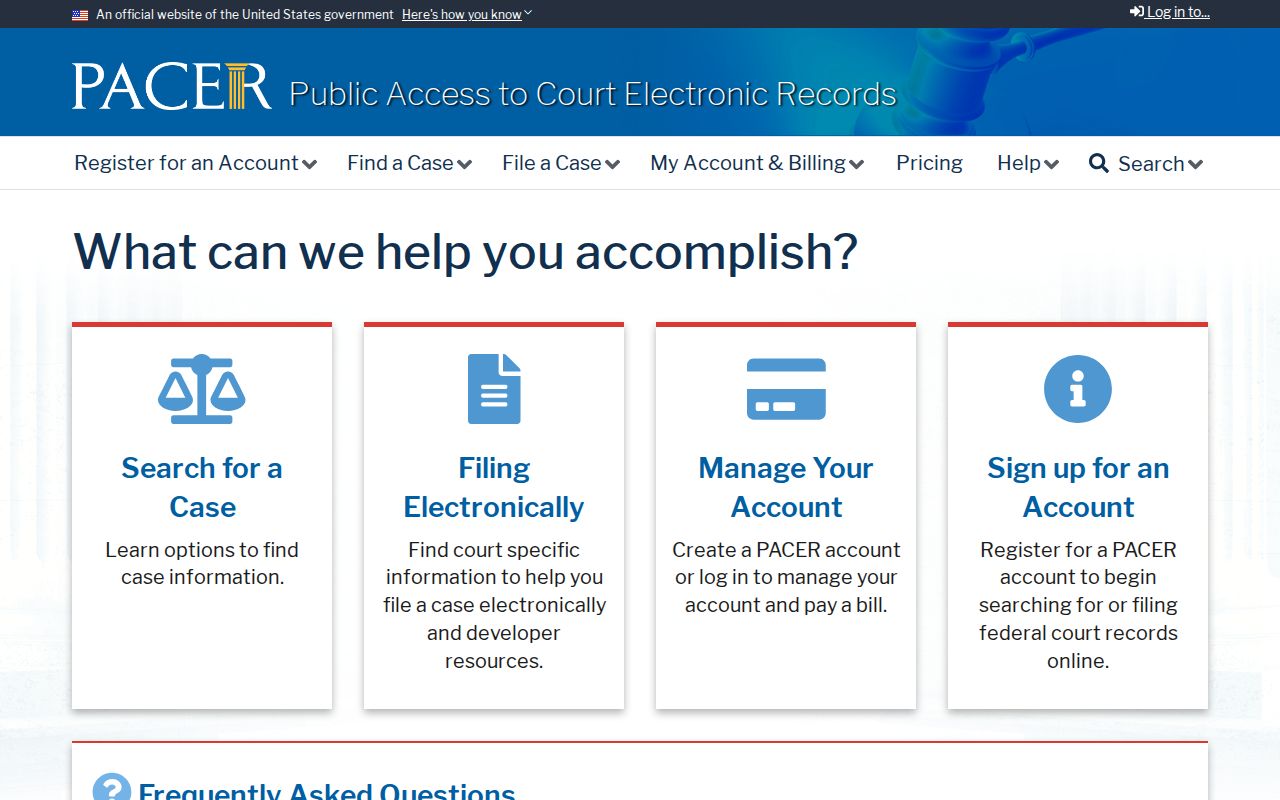
PACER keeps the federal docket channel distinct from Mineral County's state trial-court records and requires its own account and search process.
When a Mineral County Result Looks Wrong
Begin with the custodian of the disputed field. Ask Mineral Combined Court for the filed disposition or sentence order if the outcome is unclear. Compare that official order with the register and CBI result. If the court file is correct but CBI lacks the disposition, follow CBI's update or challenge channel with supporting court material.
A record that is sealed will not appear through ordinary public access, while authorized agencies may retain access. Correction and sealing are also different tasks. A factual mismatch calls for the custodian's correction process; restricting an otherwise accurate public case requires the applicable Colorado sealing procedure.